IXPE Foam
IXPE foam is produced by irradiating an LDPE sheet with an electron beam before foaming. This physical cross-link network produces a finer, more uniform cell structure, a smoother surface, and higher tensile and tear strength than chemically cross-linked XPE. It is waterproof and moisture-proof, dimensionally stable, easy to laminate, and accepts adhesives cleanly, which makes it the preferred grade for thin sheets, flooring underlayment, and any job that needs a clean, consistent surface for downstream converting.
Technical Specifications
| Base polymer | LDPE, electron-beam cross-linked |
| Cell structure | Fine closed cell |
| Density | 25 to 330 kg/m³ |
| Thickness | 0.15 to 15 mm single layer, up to 80 mm laminated |
| Width | 600 to 2400 mm |
| Shore hardness | 13 to 70 |
| Thermal conductivity | 0.038 to 0.095 W/m·K |
| Working temperature | -40 °C to 80 °C (120 °C on special grades) |
| Colours | Black, white, grey, custom |
Common questions about IXPE Foam
How thin can IXPE foam be made?
Down to 0.15 mm single layer. Electron-beam cross-linking produces a much finer, more uniform cell than the chemical route, which is what makes that thickness possible while keeping the sheet die-cuttable and dimensionally stable.
What is the widest roll you produce?
600 to 2400 mm. The wide end matters for automotive headliners and large-format laminating, where a seam in the middle of the part is not acceptable.
What service temperature does IXPE tolerate?
Standard grades run -40 to 80 degrees C. Special grades extend to 120 degrees C. Confirm the peak temperature with us before specifying, since the top of that window depends on the grade and on how long the exposure lasts.
Why choose IXPE over chemically cross-linked XPE?
Choose IXPE when you need thin gauge, a fine surface finish, tight thickness tolerance, or a wide roll. Choose XPE when you need thick sections, the widest density range, or the lowest cost per square metre. For most thermal insulation work XPE is the right answer; for automotive interiors and precision die-cut parts, IXPE usually is.
More in Thermal & Sound Insulation
View all
Insulogy by Paramount XPE/XLPE
Closed-cell chemically cross-linked polyethylene foam (XPE) engineered for thermal insulation, waterproofing, and sound control across HVAC, automotive, building and construction, and sports and leisure.
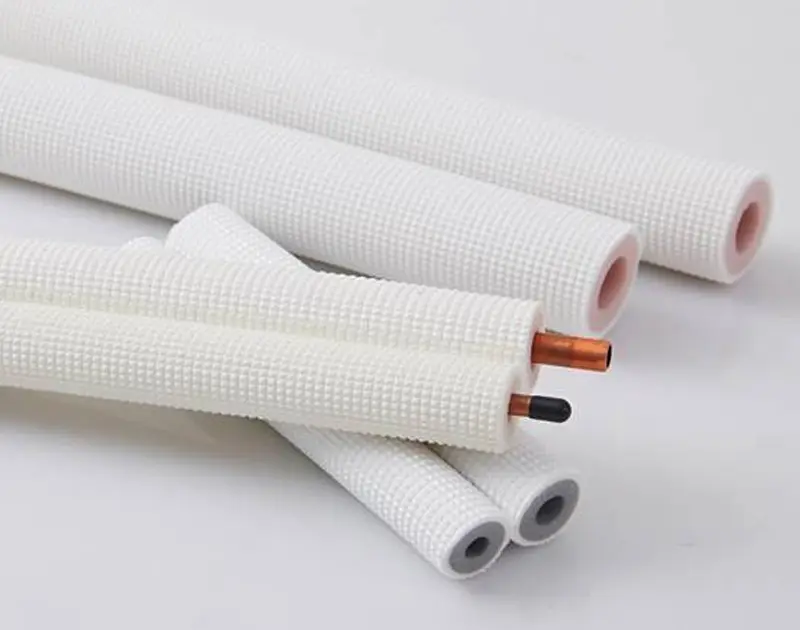
XPE/XLPE Foam Tube for Insulation
Flexible closed-cell PE foam pipe insulation with a corrugated XPE/XLPE outer skin, engineered for AC, HVAC, and industrial water lines.

Ultra Thin IXPE Foam
IXPE film is engineered for adhesive tapes, consumer electronics, and medical converting.