Oxide-Acetete Foam
Oxide-acetete foam is specially developed for extra softness, high flame retardance, and weather resistance. The blend combines the mechanical strength of XLPE with the softness of nitrile rubber, producing a closed-cell, soft, and flexible insulation that performs as both a thermal and an acoustic barrier across a wide service window from -40 to +120 °C. It is UV resistant, naturally resists fungal, bacterial, and mould growth, and meets stringent fire-safety standards including BS 476 Part 7 Class 1 surface spread of flame, BS 476 Part 6 Class O fire propagation, and the IMO MSC 307(88) smoke and toxicity index. Typical applications include hot and cold chilled water piping, HVAC ducting, glass spandrel insulation, and under-deck RCC and metallic roofing.
Technical Specifications
| Material | Oxide-acetete foam |
| Physical appearance | Soft and flexible |
| Colour | Black or can be customised |
| Density | 30 ~ 40 kg/m³ |
| Service temperature | -40 °C to +120 °C |
| Thermal conductivity | 0.034 W/m·K at 23 °C |
| Surface spread of flame | Class 1 (BS 476 Part 7) |
| Fire propagation index | Class O (BS 476 Part 6) |
| Smoke and toxicity index | Passed |
| UV resistance | Negative impact, bare foam is UV resistant |
| Fungal resistance | Negative, no growth (ASTM G-21) |
| Bacterial resistance | Negative, no growth (ASTM G-22) |
| Mould growth | Negative, no growth (IS 3144:1992) |
| Water absorption | Negligible |
| CFC / HCFC | Free |
| RoHS | Passed |
Applications
Common questions about Oxide-Acetete Foam
What is oxide-acetete foam made from?
A blend that combines the mechanical strength of XLPE with the softness of nitrile rubber. The result is a closed-cell foam that is noticeably softer and more flexible than standard XPE while still working as both a thermal and an acoustic barrier.
What fire ratings does it carry?
Class 1 surface spread of flame to BS 476 Part 7, Class O fire propagation to BS 476 Part 6, and a passed smoke and toxicity index under IMO MSC 307(88), which is the marine standard. That combination is what gets it onto projects with strict fire specifications.
Can it be used outdoors or in humid environments?
Yes. Bare foam is UV resistant, water absorption is negligible, and it tests negative for fungal growth to ASTM G-21, bacterial growth to ASTM G-22, and mould growth to IS 3144:1992.
What are the typical applications?
Hot and cold chilled water piping, HVAC ducting, glass spandrel insulation, and under-deck RCC and metallic roofing. Service window is -40 to +120 degrees C at 30 to 40 kg/m3, with thermal conductivity of 0.034 W/m.K at 23 degrees C.
More in Thermal & Sound Insulation
View all
Insulogy by Paramount XPE/XLPE
Closed-cell chemically cross-linked polyethylene foam (XPE) engineered for thermal insulation, waterproofing, and sound control across HVAC, automotive, building and construction, and sports and leisure.
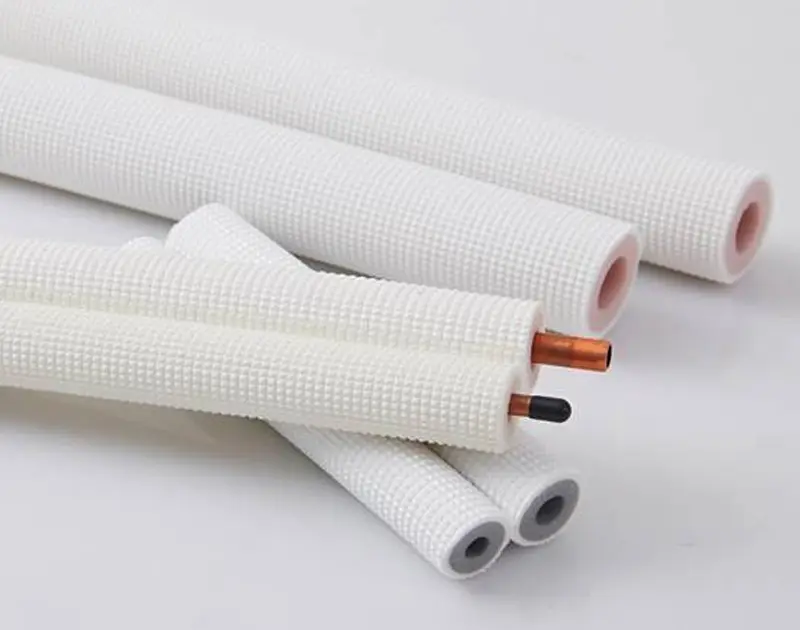
XPE/XLPE Foam Tube for Insulation
Flexible closed-cell PE foam pipe insulation with a corrugated XPE/XLPE outer skin, engineered for AC, HVAC, and industrial water lines.

IXPE Foam
Electron-beam cross-linked polyethylene foam engineered for a finer cell structure and smoother surface than chemically cross-linked grades.